Skip to the teas

05:00

Sri Lankan herbs,checked against studies,packed in paper

Kasaya Labs makes caffeine-free herbal teas in Sri Lanka. Each blend starts from a Sri Lankan herb and the old kasaya tradition, is built for one moment of the day using published studies, and comes in plastic-free paper bags and boxes.

Colombo · Sri Lanka

Lankan heritage,modern evidence,made for the moment.

Every blend starts with herbs Sri Lankan families have brewed for generations, like koththamalli, rampe and maduruthala. We check each herb against published human studies, build every tea for one moment of the day, and pack it all in plastic-free paper.

Tradition, tested
Our head of research

MeetDr. Moonපහණ

A head of stone, a coat from the lab.

Moon + පහණpahana means stone. In Sinhala, a moonstone is a සඳකඩපහණ, sandakada pahana.

His head is a moonstone, the half-moon stone carved at the foot of temple steps in Anuradhapura over a thousand years ago. His coat is from the lab. He holds a clay cup of kasaya in one hand and a flask in the other, and every tea we make has to get past both.

Let him pick your tea. He asks you four quick things:
  1. When's your cup? Morning, after a meal, afternoon or evening.
  2. Which flavour? Fresh and minty, tart and fruity, soft and floral, or warm and spiced.
  3. Hot or iced?
  4. Anything he should know? Pregnancy, regular medicine, or a child under 12.
Read his rings

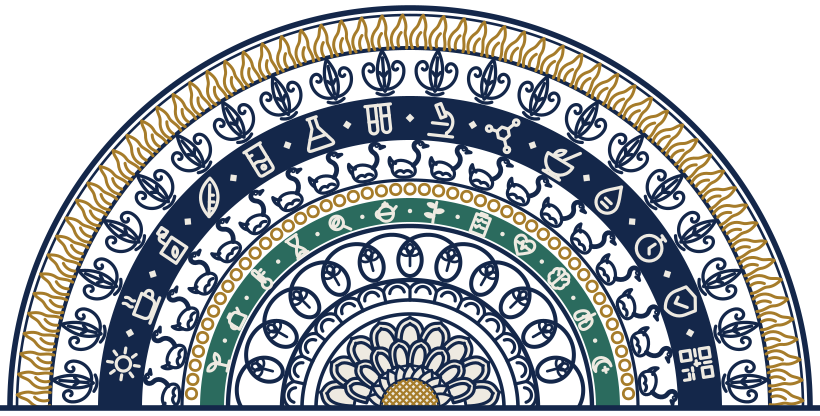
Dr. Moonපහණ's moonstone: old rings and new rings

Fire, plants, swans, a creeper and a lotus, carved at the foot of temple steps in Anuradhapura over a thousand years ago.

Lab tools and the moments of your day, set between the old rings by us.

Hover the stone

What sets us apart in six numbers

4

Sri Lankan herbs at the heart of our blends: කොත්තමල්ලි, රම්පේ, rosella and මදුරුතලා.

1

lead herb in every tea, chosen for its moment from published human studies, with the strength of that evidence stated honestly.

0

plastic in our tea bags and boxes, and no caffeine or tea leaves: only herbs, flowers and spices.

5

moments of the day, each with its own tea: morning, after meals, afternoon, the 3 pm break and evening.

3

languages on every box: English, සිංහල and தமிழ்.

1

plain panel on every box saying who should not drink that tea.

Did you know?

11.6 billion microplastic particles. From one plastic tea bag.

11.6 bn

In a 2019 McGill University study, one plastic tea bag steeped at 95 °C released about 11.6 billion microplastic and 3.1 billion nanoplastic particles into the water.

Hernandez et al., Environmental Science & Technology, 2019 ↗
1.2 bn / ml

In 2024, researchers in Barcelona measured about 1.2 billion particles per millilitre from polypropylene tea bags, and human intestinal cells took them up in the lab.

Banaei et al., Chemosphere, 2024 ↗
“Paper”

Many paper tea bags are still sealed with polypropylene, a plastic, so their seams hold in hot water.

Consumer NZ, “Is there plastic in your tea bag?” ↗

Our bags & boxes

  • Plain paper tea bags. Plant-based, with no plastic mesh and no plastic heat seal.
  • Paper and card boxes. No plastic lining, no plastic film.
  • Microplastic-free, from the bag in your cup to the box on your shelf.

Five teasone for each part of the day

Each tea is built around one lead herb, chosen for its moment from published studies, with a plain list of who should not drink it. Tap a box to open it and turn it around.

Not sure which?

How a cup
gets made

Step
one

We start from Sri Lankan herbs and old kasaya habits, and choose one lead herb for each moment of the day.

Step
two

We check every herb against published human studies, set the blend, and seal it in plastic-free paper bags and card boxes.

Step
three

We tell you plainly who should not drink it, because herbs are not for everyone.

Coming soon: scan the QR on your box for that batch's lab results

An old brew,studied anew.

කසායKasaya, noun: The Sri Lankan word for a herbal brew, boiled from coriander, ginger and leaves from the garden.Every family has its own recipe

Families in Sri Lanka have boiled kasaya for as long as anyone remembers. The recipes were passed down by word of mouth: which herbs, for which moment, for whom. What rarely came with them were the cautions, the evidence or the reasons why.

Kasaya Labs asks the questions an old recipe leaves open:

  • What does the evidence say about each herb in the cup?
  • When should you drink it: for which moment, mood or occasion?
  • Who should not drink it, and what side effects should you know about?
  • Which interactions matter, between the herbs and with the medicines you take?
  • What do lab tests say about each batch?
Old rings · traditionNew rings · science

Ancient knowledge, checked by modern science. That is the whole idea behind Dr. Moonපහණ and his moonstone: the old rings carry what tradition knew, and the new rings we cut between them carry what science can measure.

So we start from Sri Lankan herbs and old kasaya recipes, check each herb against published studies, match every blend to a moment of the day, and pack it in plastic-free paper. Every box lists who should not drink it and the interactions we know of. Batch lab results, scannable from the box, are next.

We're a small company based in Colombo. We started with five blends, one for each part of the day, and we taste every batch ourselves.

Founder, Kasaya Labs

Which cup
is yours?

Four quick questions. No exam, promise.